When 'Just Pray About It' Isn't Enough: South Asian Americans and the Long Road to Mental Wellness
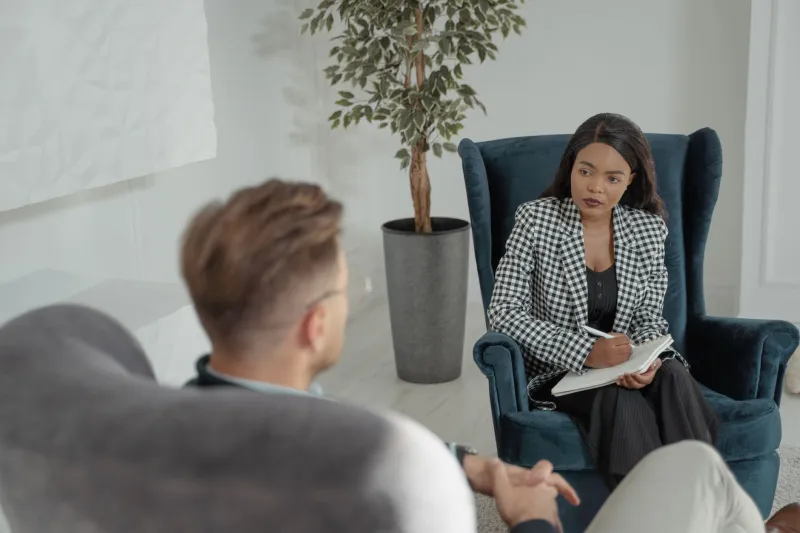
The first time Arjun Mehta mentioned anxiety to his parents, he was twenty-four years old and had already been quietly seeing a therapist for eight months. He'd rehearsed the conversation a dozen times. What he got back was a pause, and then his father saying, carefully, "But you have a good job. You have your health."
The implication was clear: suffering required a visible cause. What Arjun was describing — the tightness in his chest, the 3 AM spiraling, the sense that he was always one mistake away from catastrophe — didn't map onto anything his parents had a framework for. It wasn't a broken leg. It wasn't a failed exam. It was invisible, which in their experience, meant it was either not real or not something you spoke about outside the family.
"It wasn't that they didn't care," Arjun says now, at 28, speaking from his apartment in Chicago. "It's that they genuinely didn't have the language. And honestly, neither did I, for a long time."
The Silence Has a History
Mental health stigma in South Asian communities is not a monolith, and it's worth resisting the urge to flatten something genuinely complex into a simple cultural critique. But it's also real, and it has specific shapes.
Dr. Sunita Patel, a licensed clinical psychologist in the Bay Area who specializes in working with South Asian clients, has been mapping those shapes for fifteen years. "There are a few overlapping things happening," she explains. "There's the collectivist family structure, where individual struggle is often experienced as a family failure — a source of shame rather than a medical reality. There's the immigrant narrative of sacrifice, where the generation that crossed an ocean to build a life here doesn't have much tolerance for what can look, from the outside, like not being grateful enough. And there's the genuine absence of representation — if you've never seen anyone who looks like you talk about therapy, it doesn't exist as an option in your mental map."
Add to this the particular pressures that fall on second-generation South Asian Americans — the model minority expectations, the bicultural identity strain, the unspoken weight of parental sacrifice — and you have a population carrying a significant load with relatively few culturally competent places to put it down.
The Therapy Gap
Even for those who do reach out, the mainstream American mental health system can feel like a poor fit. Standard cognitive behavioral therapy frameworks were largely developed around Western individualist assumptions. The idea that healthy adulthood means separating from your family of origin, establishing firm personal boundaries, prioritizing your own needs — these are not universal values, and for many South Asian Americans, they can feel like a demand to pathologize their own culture.
"I had a therapist once who kept pushing me to 'set limits' with my parents," recalls Preethi Rajagopalan, a 31-year-old nurse in New Jersey. "And I kept trying to explain that my relationship with my family doesn't work like that — that interdependence isn't dysfunction. She heard it as resistance. I heard it as her not understanding anything about my life."
Preethi eventually found a South Asian therapist, which made a significant difference. But access is uneven. Culturally competent therapists who understand the South Asian American experience are still scarce in many parts of the country, and the ones who exist often have long waitlists.
Community as a Parallel Track
In the gaps, communities are building their own structures. South Asian mental health organizations have been quietly growing — groups like the South Asian Mental Health Initiative and Research (SAMIR), the Desi Rainbow Parents & Allies network, and locally organized wellness circles that operate outside formal clinical settings.
These spaces tend to hold something that individual therapy often can't: the experience of being understood without having to explain yourself from the beginning. "When I'm in a room with other South Asian women talking about our families, I don't have to give the backstory," says Nadia Chaudhry, a community organizer in Houston who runs a monthly support circle for South Asian women. "We all already know the backstory. We can just get to the actual thing."
There's also a growing conversation about what traditional South Asian healing practices can offer alongside — not instead of — clinical care. Ayurvedic approaches to mental and emotional balance, the regulating effects of mantra and breathwork, the communal processing that happens in religious and cultural gatherings — these are not replacements for therapy or medication, but practitioners and community leaders are increasingly interested in integration rather than either/or.
"The Western model treats the mind as separate from everything else," says Dr. Patel. "A lot of South Asian healing traditions don't make that distinction. There's something worth recovering there, as long as we're not using it as a reason to avoid the clinical support people genuinely need."
The Generation That's Talking Anyway
What's shifting, slowly and imperfectly, is the conversation itself. South Asian American creators, therapists, and advocates are taking to social media with a candor that would have been almost unthinkable a generation ago. Podcasts, Instagram accounts, and TikTok creators are normalizing therapy, naming anxiety and depression by their actual names, and talking openly about the specific textures of South Asian American emotional life.
Arjun's parents, three years on from that first awkward conversation, have come further than he expected. His mother recently asked him, unprompted, how he was "really doing." His father mentioned a colleague who had started seeing a counselor, without judgment.
"It's not a transformation," Arjun says. "But it's movement. And I think what moved them wasn't an argument or an article. It was just watching me take care of myself over time. Watching it work."
That might be the most honest model of change available right now — not a single breakthrough conversation, but a slow accumulation of examples. People who got help and let others see it. Families who learned a new language, one uncomfortable word at a time.
The silence is old. But it isn't permanent.