Neither Here Nor There — And That's the Point: How Second-Gen South Asian Americans Are Cooking on Their Own Terms
There's a specific kind of memory that almost every South Asian American carries around — the smell of a tempering pan hitting mustard seeds, the fog of cumin drifting through a childhood apartment, the particular sound a pressure cooker makes when it finally whistles. Food is where culture lives when everything else feels uncertain. And for a new generation of home cooks, it's also where culture gets quietly, lovingly remixed.
This isn't the story of immigrants making do with whatever's available at the nearest grocery store. That story has already been told — beautifully, honestly, and with a lot of hard-won improvisation. What's happening now is different. Second and third-generation South Asian Americans are deliberately choosing to blend their parents' culinary traditions with American techniques and ingredients, not because they have to, but because it feels true to who they actually are.
The Myth of the 'Authentic' Recipe
Ask anyone who grew up watching a grandmother cook without measuring cups, and they'll tell you the same thing: there was never one definitive version of anything. Dal was different in every household. Biryani carried the fingerprint of whatever region, whatever family, whatever mood it came from. The idea that there's a single "authentic" South Asian recipe has always been a little bit of a fiction — a comforting one, maybe, but a fiction nonetheless.
Preeti Mistry, a Bay Area-based food writer who regularly documents her cooking experiments on social media, puts it plainly: "My mom's kitchen was already a negotiation between her mother's recipes and whatever was available in suburban New Jersey in the '90s. I'm just the next chapter in that negotiation."
That framing — negotiation rather than corruption — is central to how this generation talks about what they're doing. They're not abandoning tradition. They're extending it.
What the Pantry Actually Looks Like
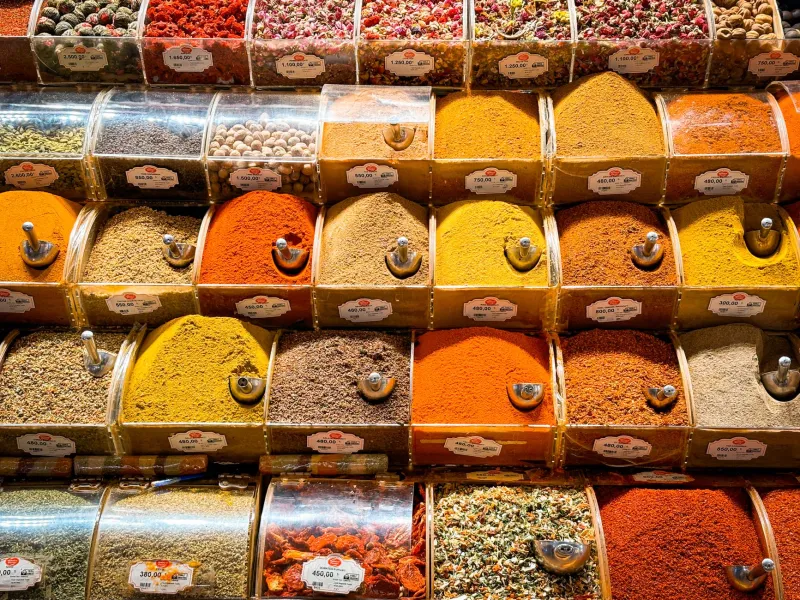
Open the cabinet of a typical second-gen South Asian American home cook in their late twenties or early thirties, and you'll find a genuinely fascinating collision of worlds. There's the hing (asafoetida) sitting next to smoked paprika. A bag of toor dal beside a container of miso paste. Ghee next to cultured butter. Tamarind concentrate a shelf above a bottle of sherry vinegar.
This isn't accidental. It's the physical evidence of a culinary identity that refuses to be neatly categorized.
Rohan Nair, a home cook and software engineer based in Chicago, started documenting his cooking during the pandemic and hasn't stopped. His approach is instinctive rather than academic. "I'll make a khichdi base and finish it with a little white wine and parmesan because I had both open," he says with a laugh. "My mom would have questions. But it tastes like something I'd want to eat on a Tuesday night, which is kind of the whole point."
The Tuesday night qualifier matters. This isn't dinner-party performance cooking designed to impress or explain. It's weeknight food — the kind that reveals what you actually crave when no one's watching.
Nostalgia as a Creative Tool
Psychologists have long noted that food is one of the most powerful triggers for autobiographical memory. For diaspora communities especially, a particular dish can carry the weight of an entire childhood, a geography, a sense of belonging that's always felt slightly out of reach on American soil.
But nostalgia doesn't have to mean stasis. Some of the most interesting things happening in South Asian American home kitchens right now involve using the emotional resonance of familiar flavors as a launching pad rather than a destination.
Sunita Krishnan, a food blogger and first-generation American based in Atlanta, describes making her late grandmother's mor kuzhambu — a yogurt-based South Indian curry — but finishing it with a swirl of cream and fresh dill because she had a surplus from a farmers market haul. "It still tasted like her," she says. "The base spices, the tanginess — all of that was there. But it was also mine in a way it hadn't been before."
That sense of ownership is something this generation talks about a lot. For years, many grew up feeling vaguely apologetic about their food — hiding tiffin boxes, hoping the smell of last night's curry didn't cling to their clothes at school. Reclaiming the kitchen as a space for pride and experimentation is, for many, a quietly political act.
When the Internet Becomes the New Cookbook
Social media has played an enormous role in this shift. Platforms like Instagram, TikTok, and YouTube have created communities where South Asian American home cooks can share their experiments without the gatekeeping that once defined food media. You don't need a cookbook deal or a restaurant pedigree to have your lamb keema pasta or your cardamom-spiced banana bread seen and celebrated.
And crucially, the audience is ready for it. The same Gen Z and millennial South Asian Americans who grew up feeling like their food was "weird" are now the ones who can't get enough of seeing their own culinary reality reflected back at them — messy, hybrid, and completely theirs.
Food writer and cultural commentator Ananya Shah, who writes about the intersection of identity and eating for several publications, sees this as part of a broader reckoning. "We spent a long time trying to make our food legible to a mainstream American audience," she says. "Now we're making it legible to ourselves. That's a fundamentally different project."
Heritage Isn't a Museum Piece
What strikes you, talking to these home cooks, is how little anxiety there is in the room. Earlier conversations about diaspora food often carried a certain defensiveness — a need to justify, to explain, to prove that you hadn't lost touch with your roots by living here. That energy feels largely absent now.
Maybe it's because this generation grew up with more cultural confidence. Maybe it's because the food world broadly has become more receptive to complexity. Or maybe it's simply because when you're standing in your own kitchen at 7pm on a Wednesday, you don't have time for an identity crisis — you just need dinner.
Either way, the result is a kind of cooking that feels genuinely alive. Not frozen in amber, not aggressively deconstructed, but evolving the way all living food cultures do: through use, through love, through the very human habit of making something your own.
Heritage, it turns out, doesn't need to be preserved like a museum exhibit to remain meaningful. Sometimes the most respectful thing you can do with a tradition is keep cooking it — even when, especially when, it starts to look a little different than it used to.