Handmade and Heard: How Indian Artisans Are Building Real Businesses in the American Market
Scroll through any interior design hashtag on Instagram long enough and you'll find them: the indigo-dyed block prints, the brass-inlaid wooden trays, the hand-knotted textiles in earthy terracotta tones. They photograph beautifully. They're described with words like "artisanal," "ethically sourced," and "slow-made." American consumers — particularly younger, values-conscious shoppers — are clearly drawn to them.
But behind every stunning flat lay is an economic story that rarely makes it into the caption. And that story is considerably more complicated than the aesthetic suggests.
The Gap Between Beautiful and Sustainable
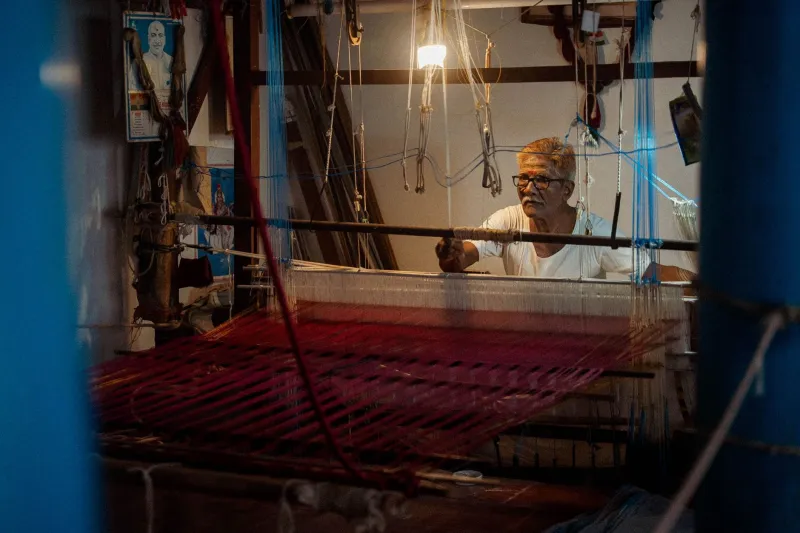
Let's start with the uncomfortable part. For decades, traditional Indian craftspeople — textile weavers in Rajasthan, blue pottery makers in Jaipur, Dhokra metal casters in Odisha, Pashmina weavers in Kashmir — have seen their work travel to international markets while the economic benefits largely stayed elsewhere. Middlemen, export companies, and retail markups meant that the artisan who spent three weeks hand-weaving a piece might earn a fraction of what it eventually sold for in a boutique in Brooklyn or a home goods store in Chicago.
The direct-to-consumer revolution — enabled by platforms like Etsy, Faire, and a growing ecosystem of ethical e-commerce sites — has begun to chip away at that structure. But "begun" is the operative word.
"The platform access is real," says Priya Shankar, who co-founded a women's weaving cooperative in Kutch, Gujarat, and now sells directly to American customers through her own website and a curated marketplace. "But the learning curve is steep. Shipping logistics, customs, payment processing, photography standards — none of this is simple when you're running a small operation in a rural area."
Her cooperative, which employs about forty women, started selling internationally five years ago. Revenue has grown, she says, but so has the complexity. "We had to hire someone just to manage the American side of things — customer emails, returns, social media. That's a real cost."
What American Consumers Are Actually Buying
On the demand side, the shift in consumer behavior is genuine. A 2023 report from the Ethical Consumer organization found that American shoppers between 25 and 40 are increasingly willing to pay a premium for goods they perceive as sustainably made and fairly traded. The handmade Indian craft market is benefiting from this — but it's also navigating a tricky question of authenticity versus market fit.
Take the case of Arjun Malhotra, a Jaipur-based pottery entrepreneur who started selling blue pottery to American buyers through a combination of Etsy and direct Instagram sales in 2021. Business picked up quickly, but so did the feedback.
"American customers love the aesthetic, but they also have very specific functional expectations," he explains. "They want things that are dishwasher-safe, food-safe, in dimensions that work for American kitchens. Traditional blue pottery is decorative — it's not always made with those uses in mind. So I had to work with our artisans to develop a line that kept the craft tradition intact but met those practical needs."
That negotiation — between cultural authenticity and market demand — is one that nearly every artisan-entrepreneur in this space is managing constantly. Get it wrong in one direction and you lose the craft's integrity. Get it wrong in the other and you lose the customer.
The Fair Trade Factor
Organizations like the World Fair Trade Organization and domestic certifiers have created frameworks intended to protect artisans from exploitation while giving consumers a trustworthy signal. Fair trade certification has real value — it sets minimum price floors, prohibits child labor, and often includes community development requirements.
But certification isn't free or simple to obtain, and for very small cooperatives or individual artisans, the cost and paperwork can be prohibitive. Some in the industry argue that the fair trade framework, while well-intentioned, sometimes ends up favoring larger operations that can afford compliance over the smallest and most vulnerable producers.
Roopa Venkataraman, who runs a Chicago-based ethical import business called Craft Thread that sources textiles directly from South Asian artisan groups, has spent years thinking through this tension. "Certification matters, but it's not the whole story," she says. "I do my own sourcing visits. I have long-term relationships with the groups I work with. I know what they're paid and what their working conditions look like. A label can't replace that kind of accountability — but most consumers don't have the time or access to do what I do."
Her solution has been radical transparency: her website includes detailed information about each artisan group she partners with, including what percentage of the retail price goes back to the maker. It's a model that's gaining traction in the conscious consumer space, though it requires significant investment in storytelling and education.
The Diaspora Advantage
One underexplored dimension of this market is the role of the South Asian diaspora in the US. For many Indian-American consumers, purchasing handcrafted goods from India isn't just an aesthetic choice — it's a connection to heritage, a way of supporting communities their families came from, and sometimes a form of cultural preservation.
This creates a customer base with a higher baseline of cultural literacy and, often, a stronger emotional investment in the authenticity question. They're more likely to know the difference between a genuine Banarasi silk and a machine-made imitation. They're more likely to ask where something was actually made and by whom.
For artisan entrepreneurs, this segment of the American market can be especially valuable — not just economically, but as a source of feedback and advocacy. "My diaspora customers are my best quality-checkers," says Malhotra with a laugh. "They know the craft. They'll tell me if something doesn't look right."
Where This Is All Heading
The economics of traditional Indian crafts in the American market are genuinely improving for some artisans — particularly those who have found ways to build direct relationships with buyers, tell their own stories, and adapt their work thoughtfully without abandoning what makes it meaningful. Platforms are more accessible than they were a decade ago. Conscious consumerism, for all its contradictions, is creating real demand for fairly traded, handmade goods.
But the structural challenges haven't disappeared. Shipping costs remain punishing. Algorithm changes on major platforms can crater a small seller's visibility overnight. And the pressure to compete on price with mass-produced "artisan-style" goods — made in factories but marketed with the same vocabulary — is constant.
What's clear is that the most sustainable path forward involves more than beautiful photography and the right hashtags. It involves direct relationships, genuine transparency, and a willingness on the part of American consumers to understand that the real cost of a handmade object includes the time, skill, and livelihood of the person who made it.
The block print on your wall has a story. It's worth knowing it.