Beyond the Two-Sugar Cup: How Chai Is Having Its Craft Moment in America
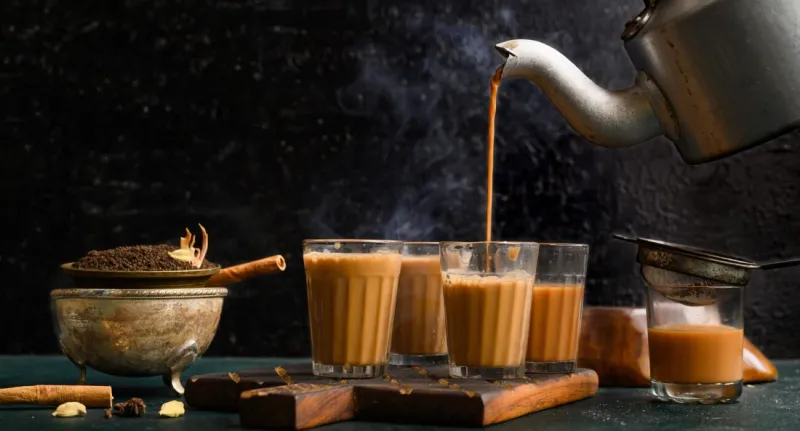
Photo: masala chai being poured from steel pot into small glass cup, Indian tea stall, via patidarrajwadichai.com
Walk into enough American cafes and you start to notice a pattern. The coffee menu reads like a wine list — single origin, roast date, tasting notes. The matcha is ceremonial grade, whisked with the solemnity of a tea ceremony. And then, in the corner, sits the chai: a spiced syrup pumped into a cup, drowned in milk, no questions asked.
That corner is finally being renovated.
The Long Wait
It's a fair question: why did chai — a drink with centuries of history, regional variation, and genuine complexity — take this long to get the third wave treatment that coffee and matcha received years ago?
Part of the answer is structural. Indian food in America was long boxed into the 'cheap eats' category, the $9.99 lunch buffet model. When your cuisine is priced as a bargain, nobody asks about the provenance of your spices. Chai rode along with that reputation, reduced to a one-note flavoring rather than a brewed beverage with terroir.
Part of it is also about who was in the room. The third wave coffee movement was largely built by people who weren't drinking chai at home. Matcha benefited from Japan's established global aesthetic cachet. Indian tea culture, by contrast, was something that happened in kitchens — in pressure cookers, at grandparents' houses — and kitchen knowledge rarely gets documented in ways the market rewards.
The New Chai Class
The people changing that are, increasingly, second-generation South Asian Americans with hospitality backgrounds and something to prove.
In the Bay Area and New Jersey, small cafes are now pouring single-estate Assam and first-flush Darjeeling, listing the estate on the menu the way a coffee shop lists a farm in Huila. In Austin and Chicago, pop-up chaiwalas are brewing karak-style — the long, slow boil that actually extracts the spices' depth — and selling out lines around the block.
Tea sommeliers of South Asian descent are entering the conversation too, insisting on what their families always knew: that cardamom should be crushed fresh, that ginger's bite changes with boil time, that the ratio of milk to water is a household signature, not a recipe.
Ritual Over Rush
What distinguishes this moment from a mere menu upgrade is the reframing of chai itself. For the new chai bars, the drink isn't a flavor — it's a practice. Some host slow brewing workshops. Others lean into the adaa, the pause, the social default of 'come have chai' that anchors so many South Asian households.
That's a quiet rebuke to the to-go model. Coffee culture in America is optimized for speed; chai culture was built around staying. The most interesting of these new businesses are designing for lingering — community tables, refill rituals, conversations that outlast the cup.
What It Signals
If chai's premium moment says anything, it's that Indian food culture in America is graduating. The same shift is visible in tasting-menu Indian restaurants earning national awards, in regional cuisines finally distinguished from one another, in second-gen chefs refusing the buffet model.
There's a risk, of course, that 'craft chai' becomes another aesthetic stripped of context — $7 for something your grandmother made for pennies. The best of these entrepreneurs seem aware of that tension, crediting the homes and the hands the recipes came from.
Either way, the syrup pump's monopoly is ending. And honestly? It was a long time coming.